Web Development
Sites that load fast, rank, and stay maintainable long after we hand them over.
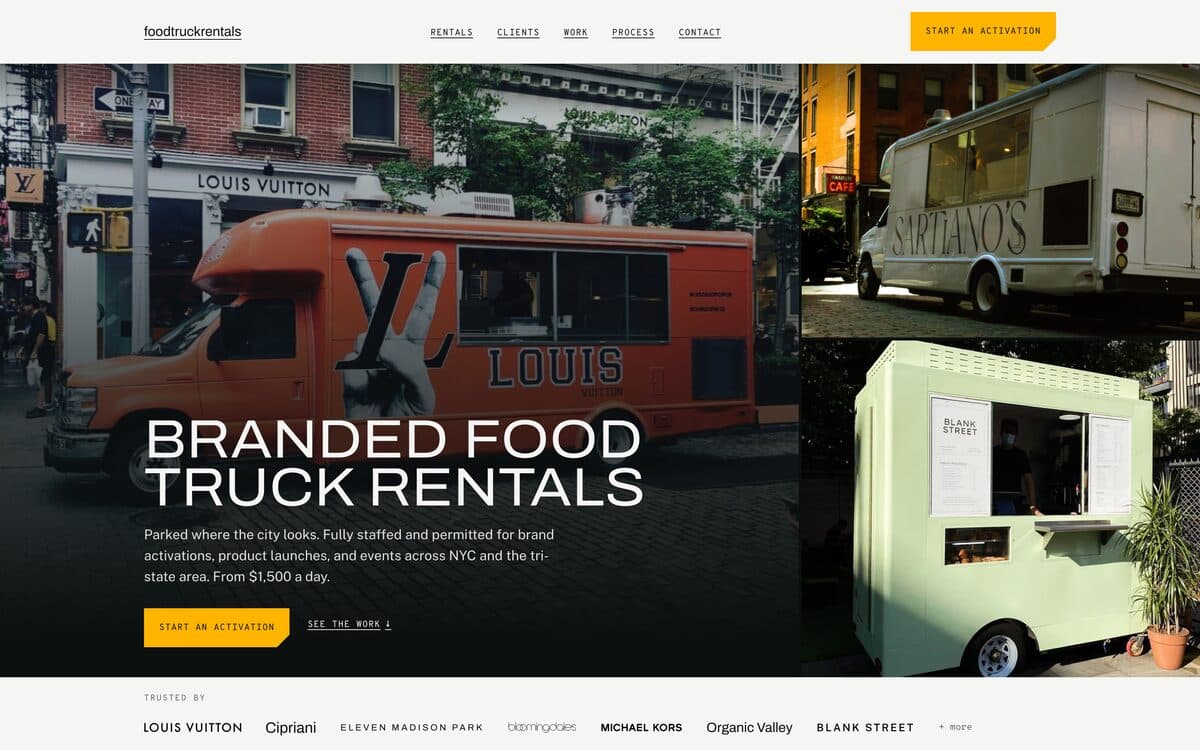
We are a web development company in New York. SEO and performance are part of the first commit rather than a phase somebody bolts on at the end. Foodtruckrentals.com is twenty-four pages of Next.js 16 and React 19 built that way: a hero that shows three wrapped trucks at once, a client roster whose active name widens on the typeface's width axis without reflowing a row, and a dedicated page for every way a truck actually gets rented. Weddings. Product launches. Film production, corporate events, ice cream, coffee carts, and the tri-state markets.
Every published price on that site lives in one module: the machine-readable price sheet and both llms files are generated from it, seven pages build their JSON-LD offers from it, and one of the site's 141 Vitest tests fails the run if a superseded price reappears in any page's copy. Another names the one page allowed to own the New York rental query and fails if a second page claims it.
New York Mobile Mechanic points the same discipline at a stranded driver: forty-five pages of service crossed with borough and thirty more that each answer one question, JSON-LD on every one of them, and a Lighthouse 100 for performance, accessibility, best practices and SEO. Stat dials rev as they scroll into view, the Google rating is pulled live with the real reviews as its fallback, and on a phone a Call and Text bar follows you down the page. When your car dies on the BQE you call whoever ranks. Nobody comparison-shops from the shoulder.
Deliverables
You need a site or an app that performs, and that still works a year from now.What you get
What we build on the web
Marketing sites built to rank:
Twenty-four pages for Food Truck Rentals, with one page allowed to own the New York query and a test that keeps it that way.
Local service sites:
New York Mobile Mechanic, aimed squarely at same-day repair demand and built to rank across all five boroughs.
Brand and booking sites:
New York Fine Foods, a Next.js site grown from six indexable pages to twenty-six: ten borough and regional catering pages each written around a fact that is only true there, four pizza-truck pages under the hub that already ranked, and a contact form that asks which service you want before anything else.
Storefronts:
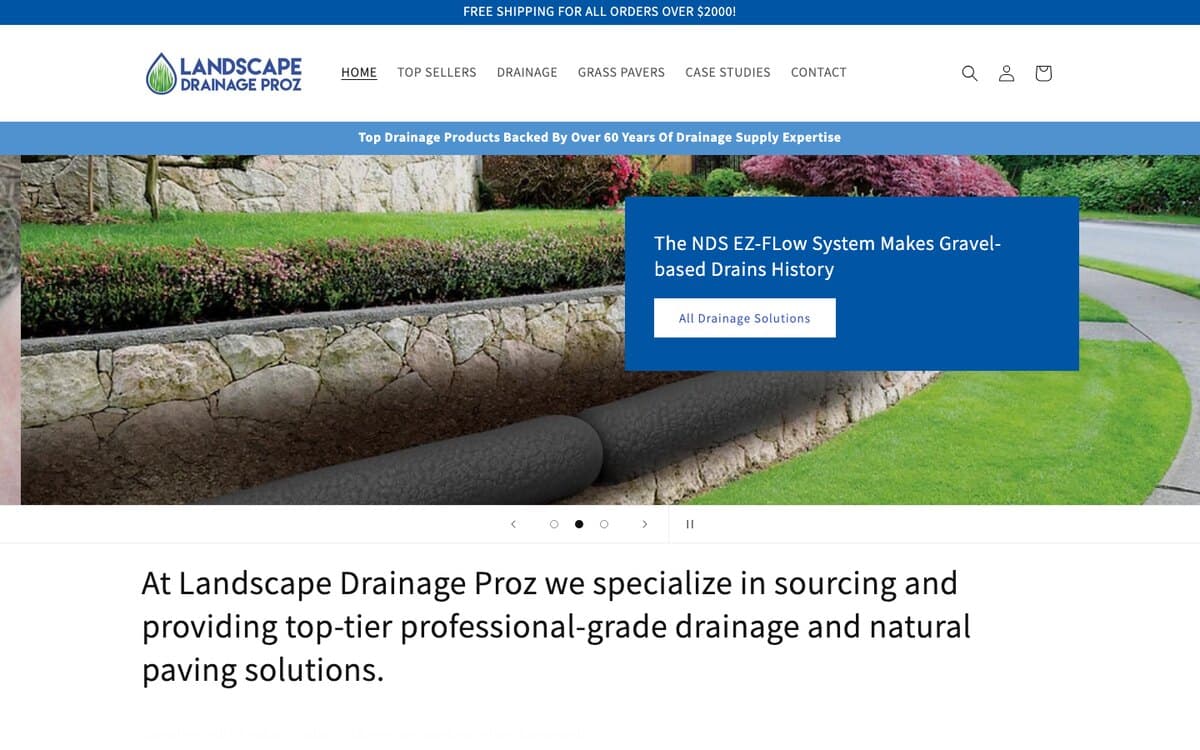
A Dawn storefront for Landscape Drainage Proz with a hand-written Custom Liquid section, a municipal quote path and Google Ads conversion labels on seven storefront events, from page view to purchase.
Rebuilds:
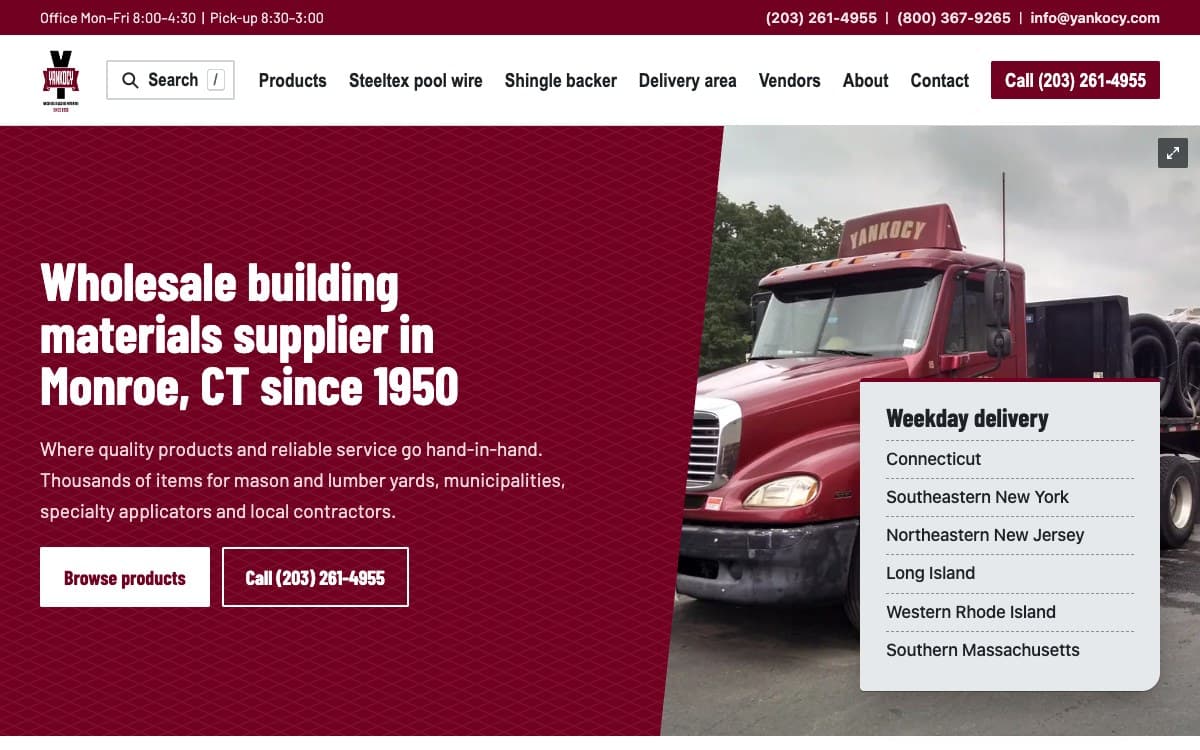
Yankocy, a wholesale building-materials supplier in Monroe, Connecticut, from a nine-page site to twenty-six, with every old address redirected so the move keeps what already ranks.
The stack:
TypeScript, Next.js, React, Tailwind CSS and GSAP, with Shopify and custom Liquid where a storefront calls for it.
Why clients hand us the whole build
Whoever scopes it, builds it:
The people who write your scope are the people who write your code. You keep the same names from the first call through to launch, and nothing gets quietly reassigned once the contract is signed.
In your timezone, on the phone:
We work out of New York. You get a number that reaches the people building your project and somebody picks it up. There is no ticket queue and no account manager sitting in the middle of it.
We rank New York businesses:
Local SEO is part of the build rather than an upsell afterwards. The mobile mechanic we built has a page for every service in every borough, and on 28 July 2026 ChatGPT, asked for the top five mobile mechanics in New York City, listed it first.
We stay on after launch:
We hold the pager, fix what breaks, and hand over once your team wants it. The same people are still reachable six months after launch.
Where this shipped
In a client's words
“Working with Hamad was professional, creative, and incredibly responsive.”
Brian Murphy, Google review, August 2026
Is your site slow, invisible on Google, or both?