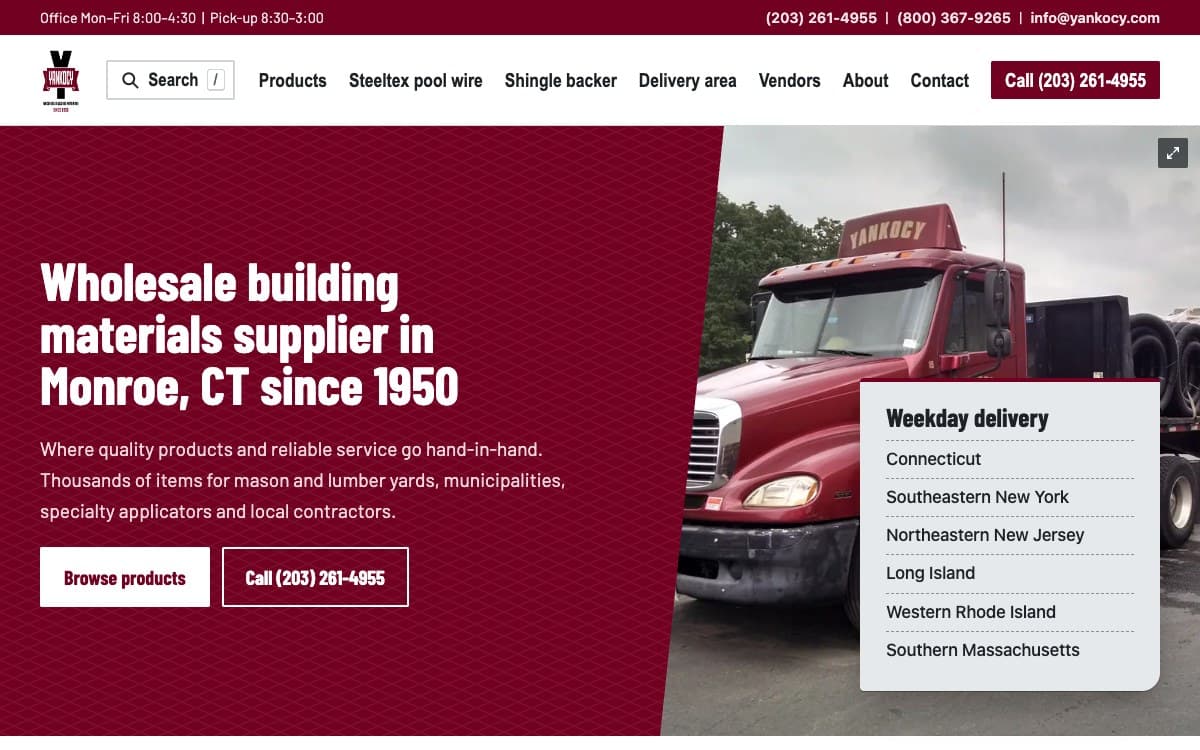
A wholesale building materials distributor in Monroe, Connecticut, that sells to the trade, on a nine-page GoDaddy site: more than a hundred products on one page, no main heading on eight of the nine, and a Steeltex pool wire page that took 11.6 seconds to show its main content on a phone.
A static site built by a Python script we wrote, with no framework and no npm dependencies. Plain HTML, one 42.8 KB stylesheet, a 16 KB search script that loads after the page, and two typefaces served from the site itself. It is hosted on Vercel, with the redirects and the security and caching headers written into one config file by the build. The build stops if any page has more than one main heading, a title over 60 characters or a description over 160.
One long product page became thirteen.
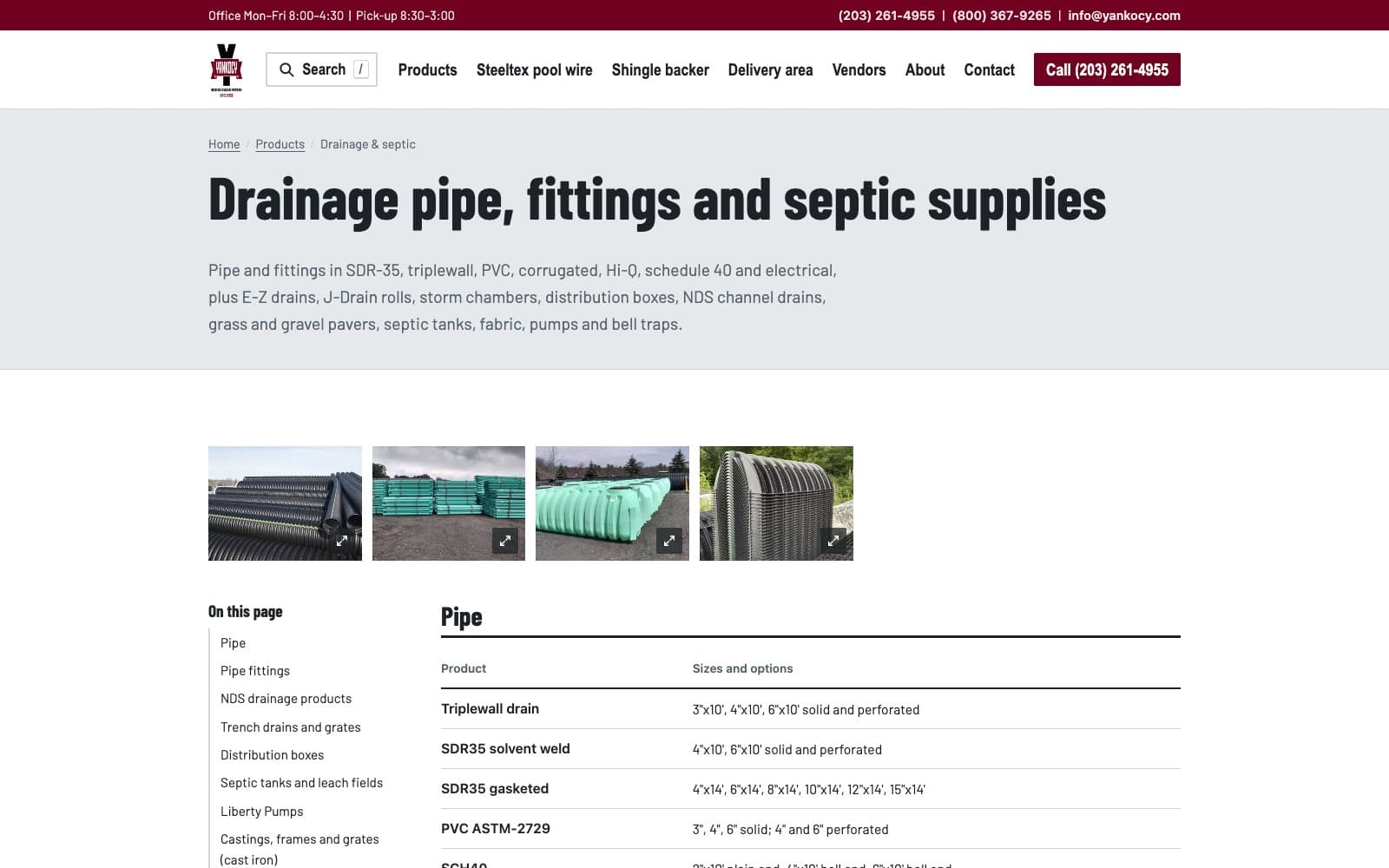
The old site listed more than a hundred products on a single page of 1,541 words. We split it into thirteen category pages under one catalogue: drainage and septic, masonry supply, rebar and wire mesh, concrete accessories, and nine more down to ice melt. Each product group has its own heading and a spec table of sizes and options, 271 rows across the site. The three products that ship nationwide, Steeltex pool wire, shingle backer board and Bearcat wheelbarrows, each got a page of their own.
A contractor who knows the part number should not have to scroll for it. The search box in the header opens with the slash key or Ctrl+K, reads from an index of 262 items built with the site, copes with sizes, plurals and small typos, and jumps to the exact row in the table.
Thirty-seven old addresses, each sent to a working page.
A business that already shows up in search has the most to lose from a new site. So before anything else we listed every address the old site had ever answered on: the nine pages, eight older aliases, the copies GoDaddy served to phones, and two old sitemaps. That came to 37. On the new site each one redirects permanently, in one hop, to a page that loads, and we checked all 37 against the new site.
The words moved over too. We kept every line Google was quoting from the old pages, and each page grew: the home page from 457 words to 726, the Steeltex page from 288 to 574, About from 194 to 531. Before the switch we saved a dated record of where each old page stood, with the signs that would mean rolling back. The site is built and is being switched over from GoDaddy now.
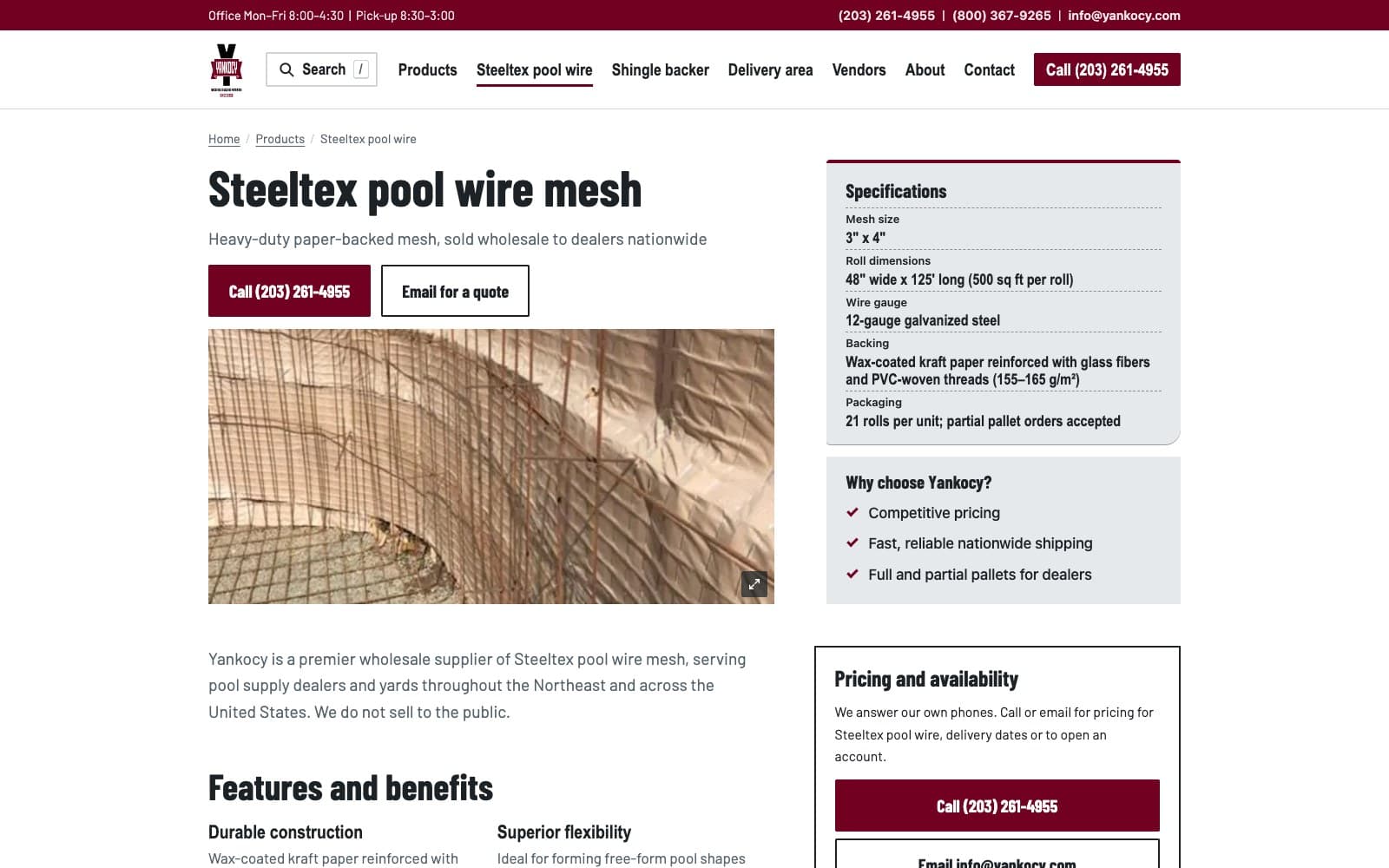
The Steeltex page, before and after.
Steeltex pool wire is one of the three products Yankocy ships nationwide, so its page is the one we report here. On a phone, in Lighthouse, on 24 September 2026, the old page scored 47 for performance and the new one 88. The main content showed in 1.9 seconds, down from 11.6. The page weighs 167 KiB, down from 1,850, and accessibility went from 53 to 100.
Most of that is what the page no longer carries. The old home page loaded a carousel of fourteen photos, 25.8 MB of them. It now opens on one. Every image was re-encoded as WebP in several widths with its size declared, so a phone downloads the small one, and the fonts come from the site itself with no request to anyone else.
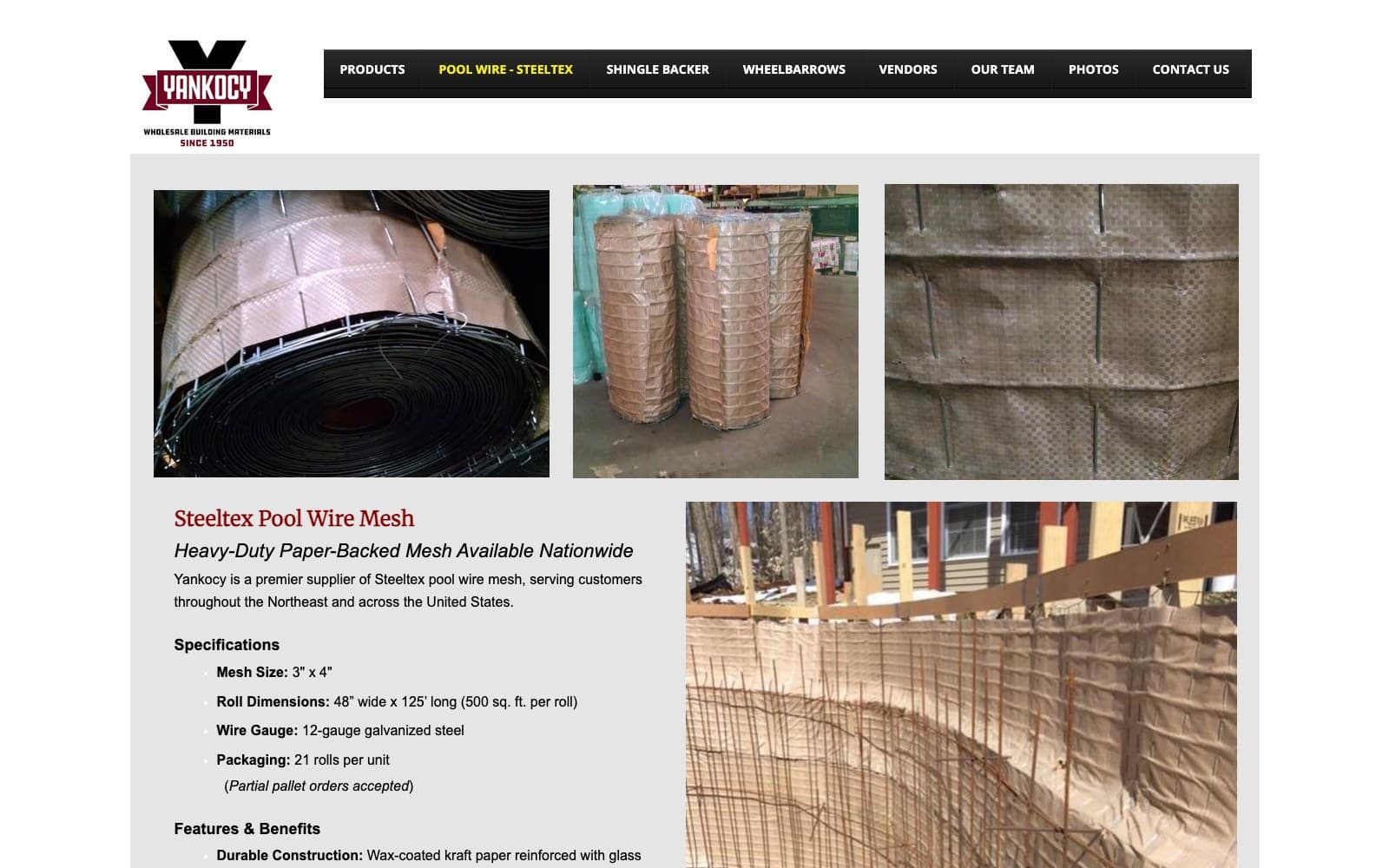
The same page on the GoDaddy site. The specifications were a bullet list, and nothing on the page was marked as its heading.
Written for dealers and yards.
The first keyword plan included searches like masonry supply near me, which gets about 12,100 a month. Then Yankocy told us the mason yards and lumber yards are its customers. We looked at who Google shows for that search, and the local results were those same yards. So we took the phrase off the list, along with the do-it-yourself searches, and aimed the site at what only a distributor sells: Steeltex, shingle backer board and wholesale building materials.
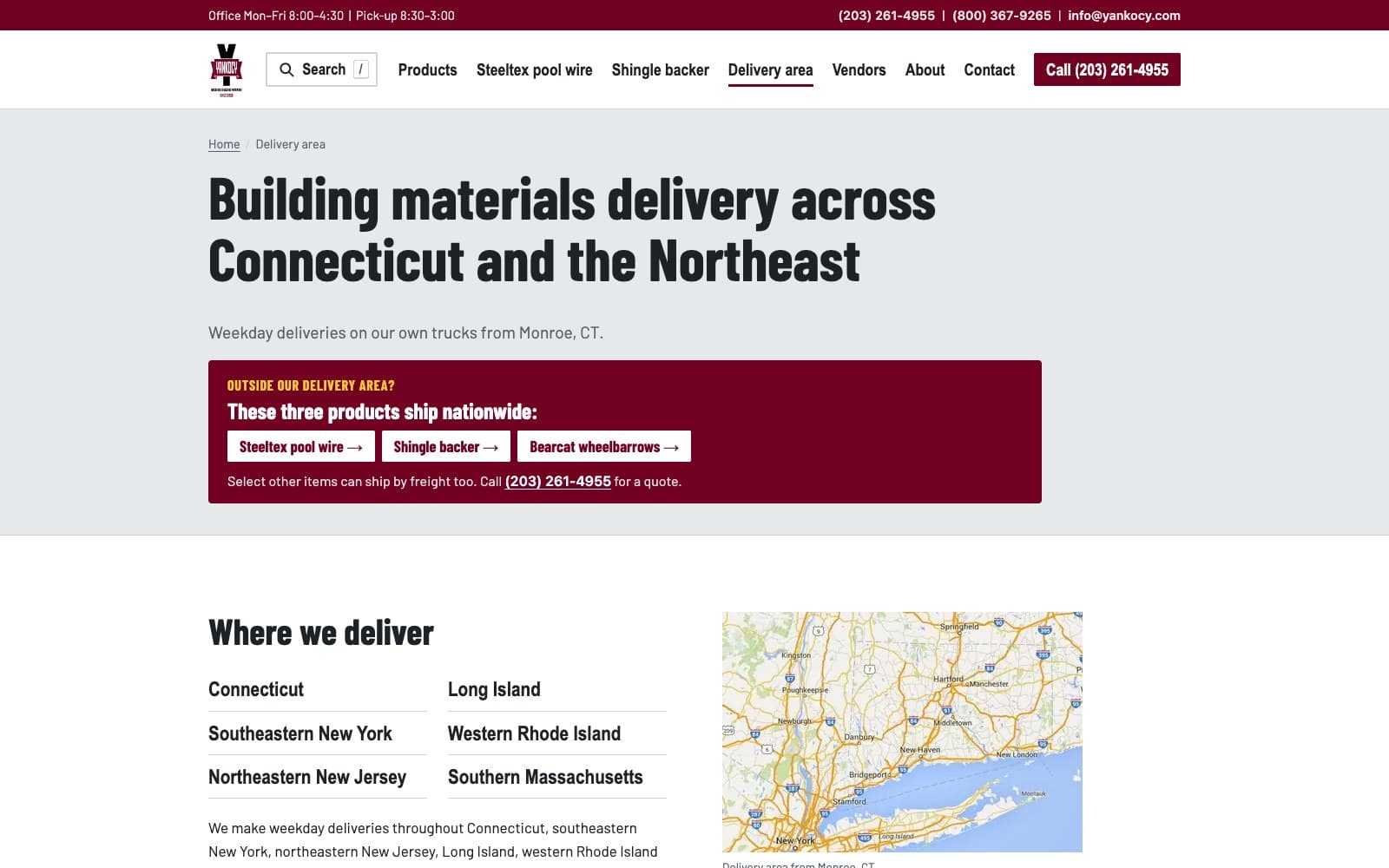
The copy says it plainly. The Steeltex page is sold wholesale to dealers nationwide and ends with We do not sell to the public. A homeowner who lands there finds a question written for them, pointing to their pool builder or local pool supply dealer. The delivery page lists the six regions the trucks cover and, for anyone outside them, names the three products that ship anywhere.
Structured data on all 26 pages.
The old site had none. Every new page tells search engines the same facts about the business: a wholesale store at 143 Enterprise Drive in Monroe, its hours, its phone lines and the regions it serves. Twenty-two pages add a breadcrumb trail, fourteen are marked as catalogue pages and three as product pages. Sixteen carry their questions and answers as FAQ markup, 56 questions in all. Product markup is held back on purpose, because it expects a price and Yankocy does not publish prices.
Underneath that are the basics the old builder could not do. Each page names its own address as the canonical one. The sitemap lists 23 pages and changes a page's date only when that page's content changes. Phones and desktops now share one page, where GoDaddy served phones a copy of their own, and an llms.txt file describes the business for AI assistants. Nothing here claims a ranking. The site has not switched over yet, so there is nothing to measure.
Project details
- Pages26 pages · 13 categories · 23 sitemap URLs
- Redirects37 old addresses, one hop each
- Build checksOne heading per page · titles ≤ 60 characters
- Year2026
- StatusBuilt · switching over from GoDaddy
Outgrown your site builder, but afraid to lose the pages that already work?