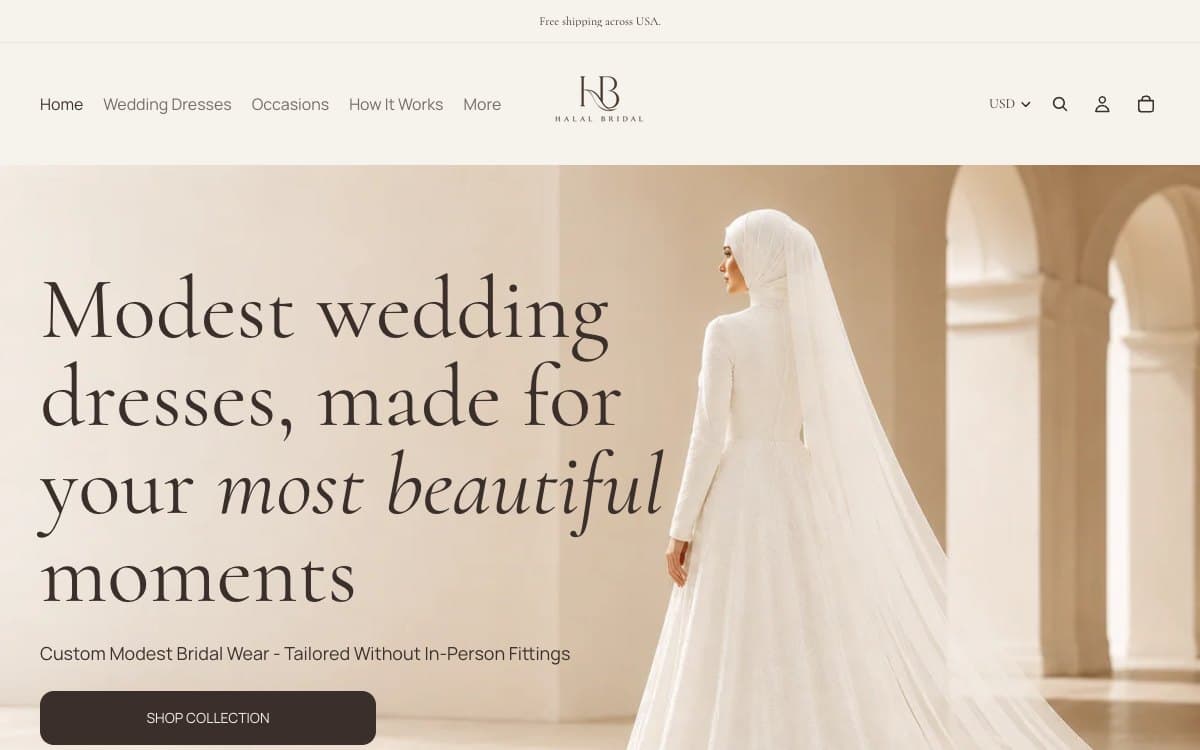
A bridal store that makes modest wedding dresses to each bride's measurements and sells them online. Its home page title in a search result was the store's two-word name, with no description under it. Each of its 33 gowns was titled with a first name, and the whole catalogue sat in two collections.
We worked inside the store the client already had, on the theme the client already had. Every change went through Shopify's Admin API from Python scripts: 524 changes between 17 and 20 September 2026, each one logged next to the response Shopify sent back. Each script runs as a dry run first and keeps a backup, so any change can be put back.
The first thing a search result shows.
The home page now reads Modest Halal Wedding Dresses, Made to Measure in a search result, with a 148-character description under it. Its headline, at the top of this page, was rewritten to match. We did the same for all 33 products: a title of 60 characters or fewer that says what the dress is and what it is for, and a description written for that dress.
Two product addresses carried the name of a different dress. Both were among the store's most-shown pages in Google, so we renamed them and set up permanent redirects. Anyone following an old link still lands on the right gown.
From two collections to ten.
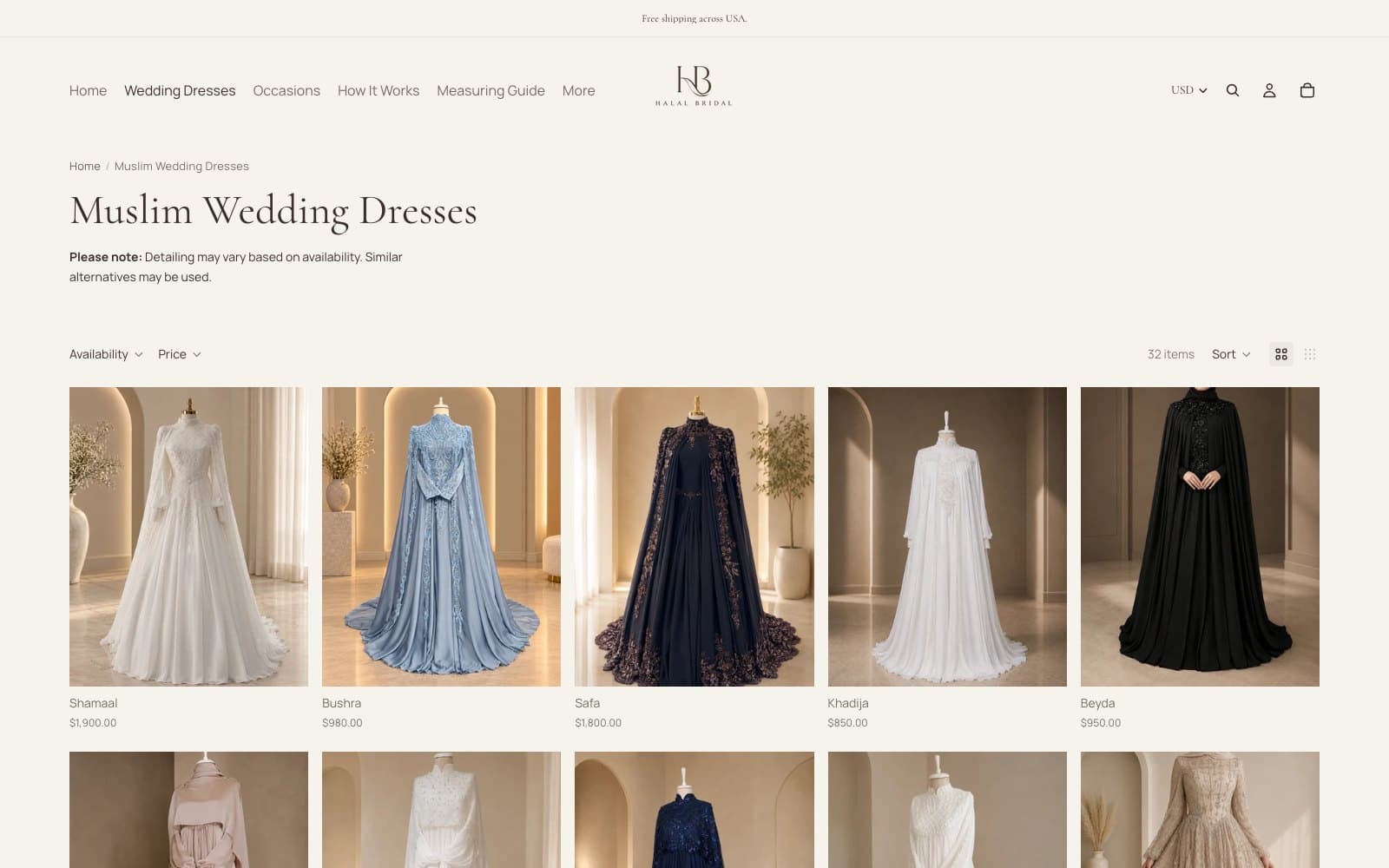
Brides search for the dress they have in mind: a hijab wedding dress, a nikkah dress, a red one, one with a cape, one with a high neck and long sleeves. The store had two collections, so those searches had no page made for them. We checked which phrases people actually type, then built a collection for each: Muslim, hijab, nikkah, cape, high-neck and long-sleeve, red, and Arabic wedding dresses, plus a proper page for the full catalogue. With the two that already existed, that is ten.
A page for the question behind the search.
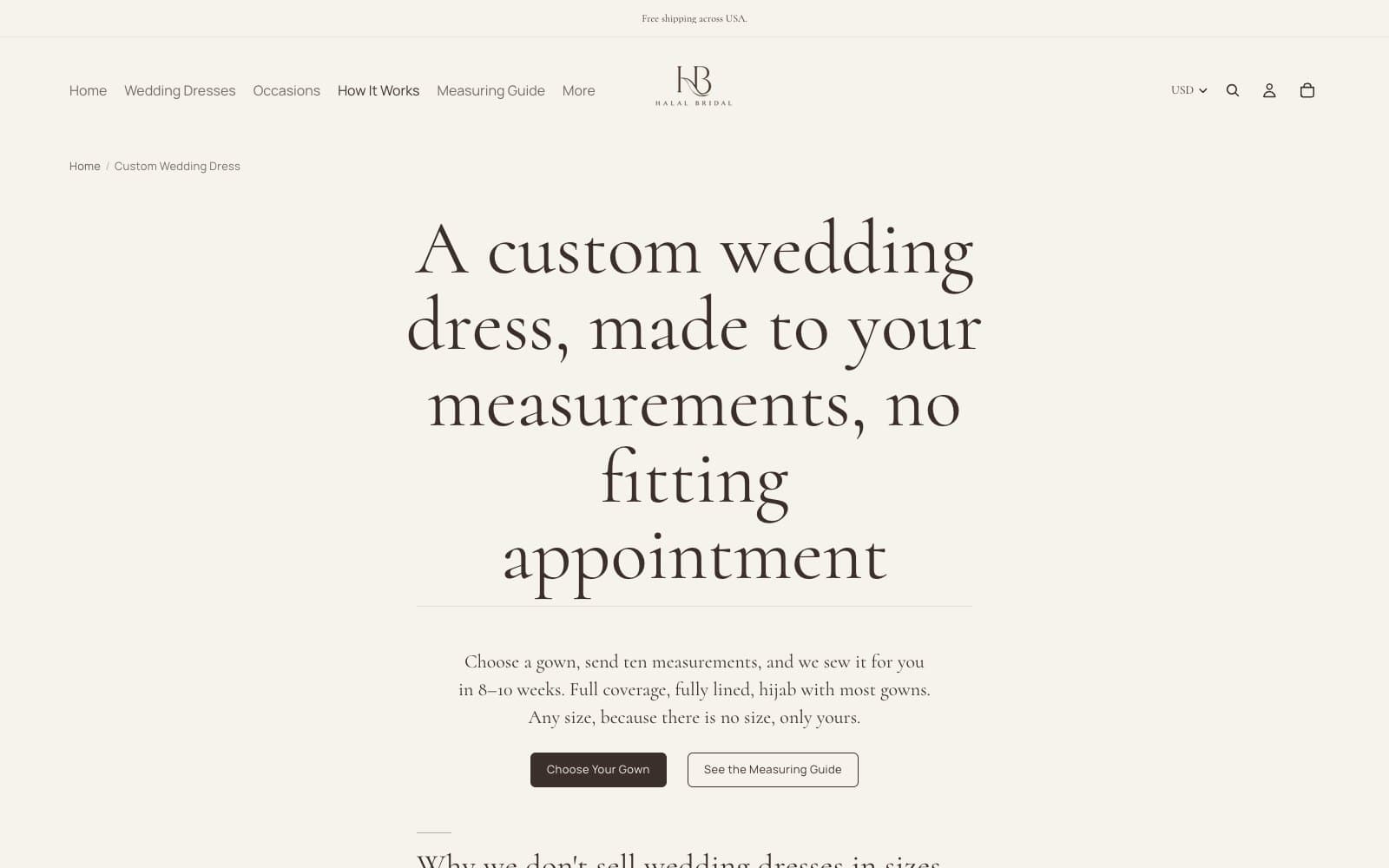
Some brides search for the service before the style: can a dress be made to fit without a fitting? We wrote a page for that question. It opens on the headline A custom wedding dress, made to your measurements, no fitting appointment, and sets out the steps, from choosing a gown to sending ten measurements.
We also published 17 posts in the store's journal. Each one answers something brides ask before they buy, from what a walima dress is to how to dress for a formal evening in hijab.
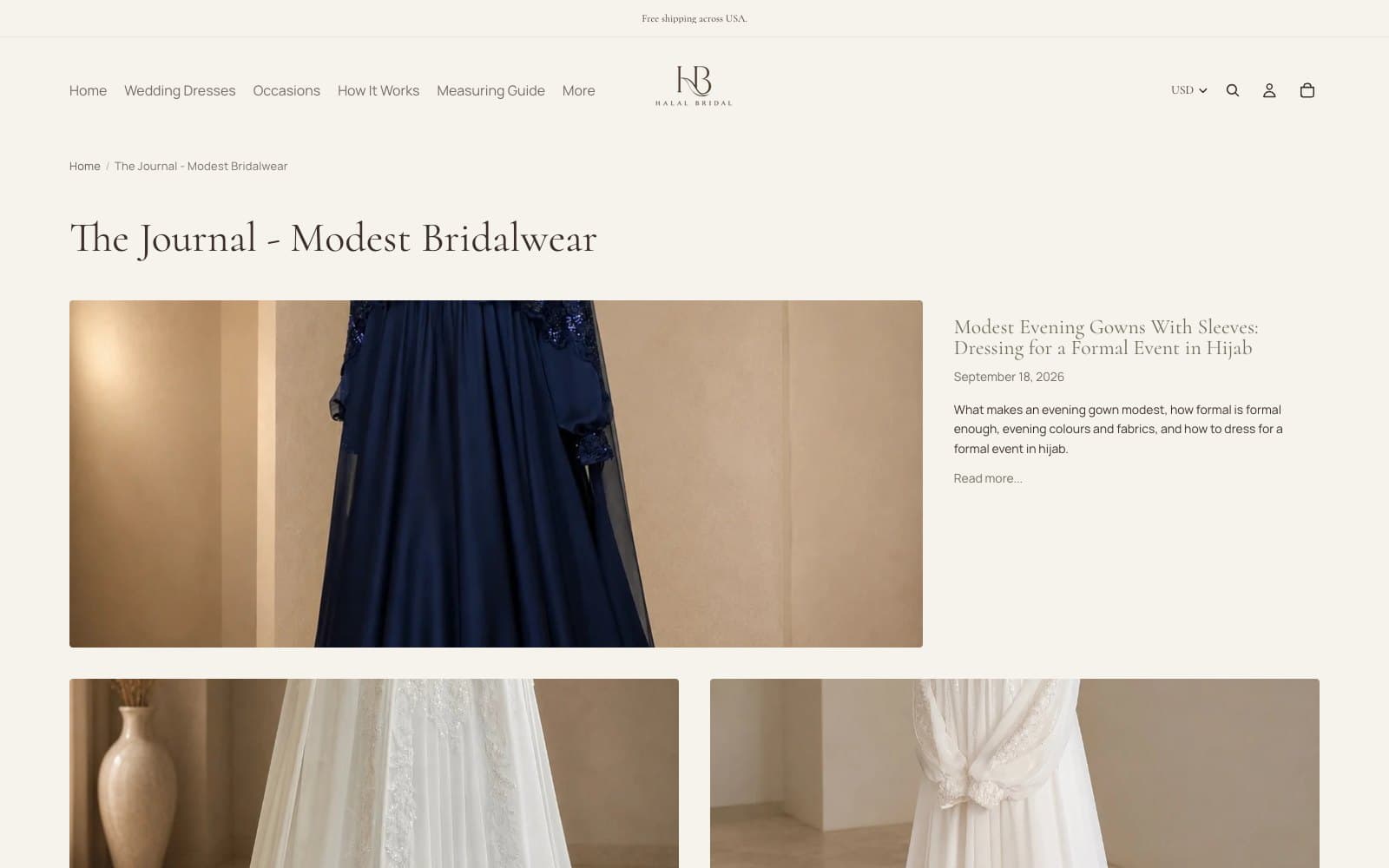
The journal. Seventeen new posts, each with a breadcrumb trail back to the store.
Facts a search engine can read without guessing.
Every page type now carries a breadcrumb trail, both on screen and in the code search engines read. Each of the 33 products describes itself the same way: price, a product number, shipping to 19 countries, and a production time of 56 to 70 days. That last figure used to say something shorter than the 8 to 10 weeks printed on the page, so we made the two agree.
The store as a whole describes itself too, as one business with one website and a search box. The FAQ page marks up its six questions and answers. None of this changes how the store looks. It changes what a search engine can be sure of.
One lab result, and the rest still to come.
Collection pages loaded 24 images up front. We cut that to 4, so the rest load as a shopper scrolls. In a lab test on a simulated phone, one run before and one after on 18 September, the Muslim wedding dresses collection went from a performance score of 61 to 81. The main image appeared in 4.4 seconds instead of 12.9, and the page weighed 2.72 MB instead of 4.49.
Rankings and traffic take months to move, and this work shipped in September. So this page makes no claim about either yet. We are measuring, and the next check is set for 15 December.
Project details
- Scope33 products · 10 collections · 17 posts · 1 new page
- Changes524 logged API changes · 17–20 Sept 2026
- ThemeHorizon 3.5.1 (the client's)
- Year2026
- PlatformShopify
- Live sitehalalbridal.com
Does your store show up in Google as just its name?